Thursday, October 21, 2010
I'm Pretty Predictable
Around the time that I came back from vacation in Mahabaleshwar, I realized that people had begun to recognize me. It isn't the same as fitting it, but it's nice to realize that people see you as a part of their routine rather than a total stranger. The guy who works at the grocery store now greets me by sight. One morning, a fruit vendor who didn't have an extra rupee (equivalent to 0.02 cents) to give me in change told me quite earnestly that he would give it to me when I walked by tomorrow, acknowledging that I do walk by him every morning at the same time. Another day, I approached the vegetable vendor who always gives me the best deal on what I want. He saw me coming, met my eye, nodded, and started putting green beans on a scale before I said anything to him.

Parsi Restaurant
The Parsis are members of the Indian Zoroastrian religion. This is an ethnic, as well as religious, identity, since in order to be considered a Parsi one must be descended from the original Persian emigrants who established the faith in India as well as a believer.
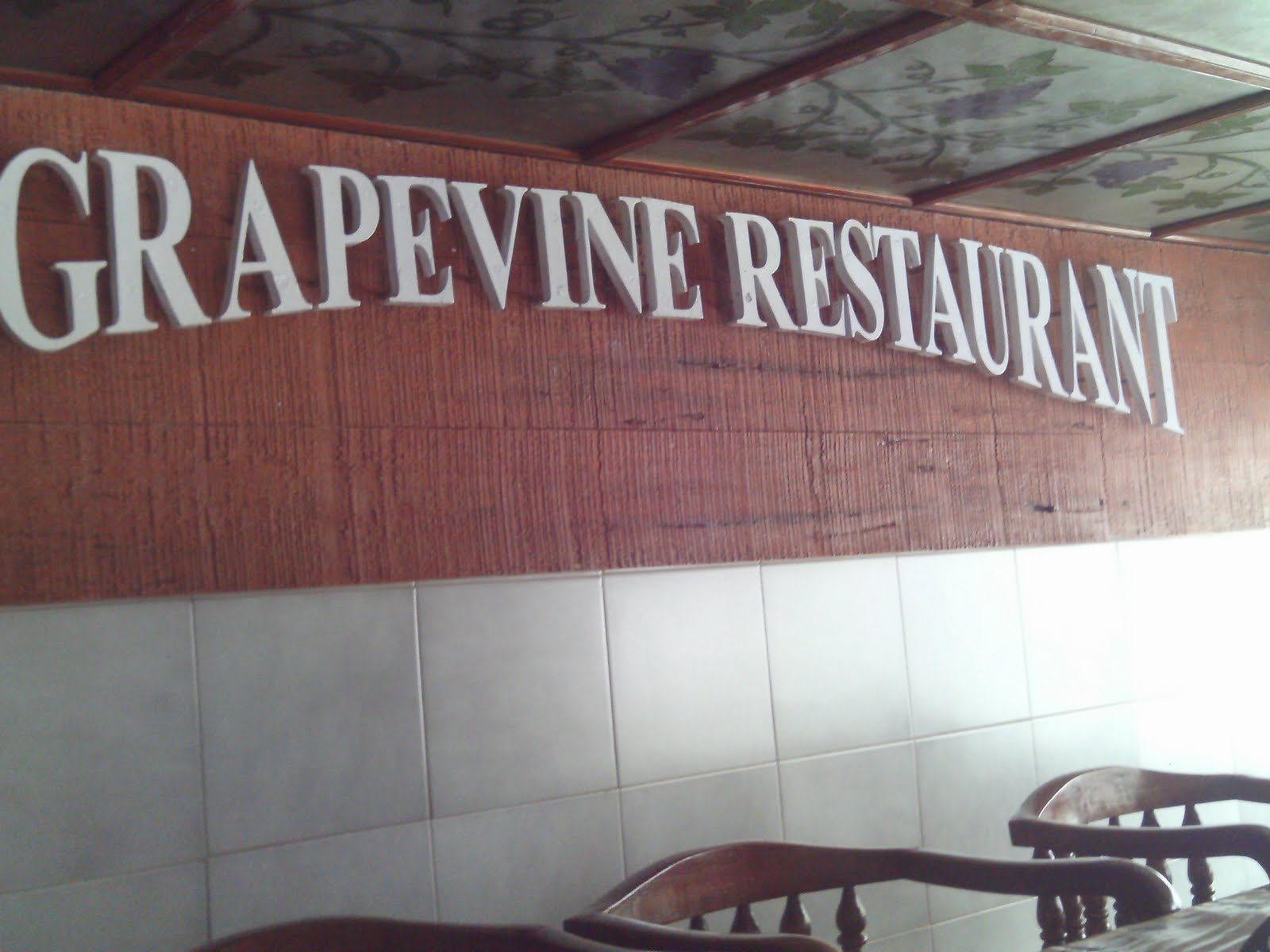
Through my guidebook, I learned that in Mahabaleshwar there is a Parsi restaurant, and it was one of the goals of the trip to go there. I was interested to try a type of ethnic cuisine that I probably wouldn't get a chance to try again. Also, my guidebook, which is always deprecatory, highly recommended this place.

They keep a picture of Zoroaster over the door.

Parsi style chicken appetizer. They're like very seasoned chicken meatballs.

Fish with tomato chutney, and some vegetables. Indian "salad" usually consists of chopped onions and tomatoes with a squeeze of lime. To give you an idea of how hot the chutney on this fish was, I was eating the onions to cool my mouth off.
This was the most expensive meal I've bought in India, but one of the best.
Tuesday, October 19, 2010


Roughing It In the Mountains and Partying for God
When we got to Mahabaleshwar, we had reservations to stay at the second-to-cheapest hotel that was listed in the Lonely Planet India guidebook, the Blue Star Hotel. We wanted what was essentially a place to camp out before hiking around outside, which was good, because that was all we got. The room was clean, located on the main road, and free of mosquitos. There were no phones, no internet, no matching sheets, no toilet paper, no functional toilet, and no running hot water. We got hot water once a morning. At about 8 am, without being asked, the hotelkeeper would wake us up by knocking on our door to ask how many buckets of hot water we would like, while roosters crowed insistently outside. Yes, seriously.
On top of that, we discovered that Mahabaleshwar is a popular place that people visit to do puja, and it happens to be festival (ie, religious holiday) season in general, and the holiday of Dusshera in particular. At the end of the main road, there was a devotional stage with painted plaster statues and lots of flowers set up. The stage also had an electric "Om" light that looked like it was produced by the same places that make "Open" signs. This juxtaposition of ancient devotional sound and modern electronics greatly amused me, but I decided not to take a picture in case anyone would be offended.
There was devotional music that started at about eight or nine at night, and continued until about three in the morning. The music was a mixture of pop-beat, Bollywood-style religious songs and traditional chanting, with (very loud) live drummers that created a pounding, underlying base beat. This place was a few hundred feet from the hotel room, so we heard it all night long as we tried to sleep after walking around on trails all day. My mind kept incorporating the music into the dreams I was having, which gave me dreams about being at some very strange parties.
On top of that, we discovered that Mahabaleshwar is a popular place that people visit to do puja, and it happens to be festival (ie, religious holiday) season in general, and the holiday of Dusshera in particular. At the end of the main road, there was a devotional stage with painted plaster statues and lots of flowers set up. The stage also had an electric "Om" light that looked like it was produced by the same places that make "Open" signs. This juxtaposition of ancient devotional sound and modern electronics greatly amused me, but I decided not to take a picture in case anyone would be offended.
There was devotional music that started at about eight or nine at night, and continued until about three in the morning. The music was a mixture of pop-beat, Bollywood-style religious songs and traditional chanting, with (very loud) live drummers that created a pounding, underlying base beat. This place was a few hundred feet from the hotel room, so we heard it all night long as we tried to sleep after walking around on trails all day. My mind kept incorporating the music into the dreams I was having, which gave me dreams about being at some very strange parties.
The Streets of Mahabaleshwar
The actual "town" of Mahabaleshwar consists of two streets. Literally. All the shops are on those streets, as well as hotels and religious buildings. The place is largely known for a vacation spot where people can go out and hike up trails in the mountains, as we were doing. It is also known, as I found out after arriving, as a site for Hindu religious pilgrimage.

In the commerce realm, the town of Mahabaleshwar is largely known for producing honey and jam, and half the shops seem to sell only these two things. This place is especially known for its strawberry and mullberry jams, since those two berries grow in the area. I bought some mullberries to try from the man pictured above, and they were good. They had a fairly generic berry taste, and were probably closest to blackberries in flavor.

The picture above is a collection of typical Mahabaleshwar jarred goods that we purchased to eat on slices of bread for breakfast before walking around on the mountainside. The jars are (from the left) raspberry jam, gulkand (sweetened rose petals), and mixed spicy pickled fruits with garlic.

We also visited a store where they sold these candies. The gum in the green jar is called "Chloro-mint" with the subtitle "functional gum." The orange-colored Mentos are mango-flavored.

We also walked passed "New India Boot House," most notable for its lack of boots.

There were also a few of the obligatory unowned cows wandering along the street.

In the commerce realm, the town of Mahabaleshwar is largely known for producing honey and jam, and half the shops seem to sell only these two things. This place is especially known for its strawberry and mullberry jams, since those two berries grow in the area. I bought some mullberries to try from the man pictured above, and they were good. They had a fairly generic berry taste, and were probably closest to blackberries in flavor.

The picture above is a collection of typical Mahabaleshwar jarred goods that we purchased to eat on slices of bread for breakfast before walking around on the mountainside. The jars are (from the left) raspberry jam, gulkand (sweetened rose petals), and mixed spicy pickled fruits with garlic.

We also visited a store where they sold these candies. The gum in the green jar is called "Chloro-mint" with the subtitle "functional gum." The orange-colored Mentos are mango-flavored.

We also walked passed "New India Boot House," most notable for its lack of boots.

There were also a few of the obligatory unowned cows wandering along the street.
Subscribe to:
Posts (Atom)